Guido's Claustrophobia
Man on FireGuido’s Claustrophobia is a persistent vulnerability that surfaces whenever his freedom of movement is restricted. Prison brings on acute depression, and later internment renews his torment even in surroundings with plenty of room. The episodes distinguish physical space from the freedom to leave it: open country helps him readjust, but space alone cannot make confinement bearable.
First Confinement
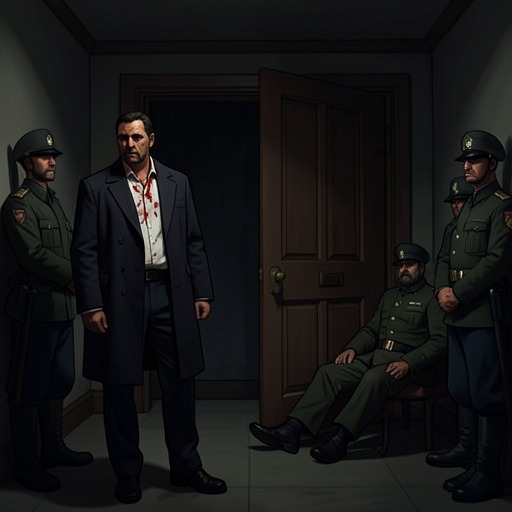
At eighteen, Guido is sentenced to two years in prison as one of a dozen low-level operators tried after the police and public prosecutor reached an accommodation with the victorious criminal faction. The sentence exposes a difficulty he had not anticipated. The hardships and indignities of prison are familiar enough from his upbringing, but confinement reveals that he suffers from mild yet definite claustrophobia, which manifests as acute depression.
The Italian penal system takes no account of this problem, and Guido suffers badly. His distress is not met with recognition or accommodation; the institution treats his confinement as an ordinary punishment while he experiences it as a particular psychological ordeal.
Release and Readjustment
After his release, Guido spends two months away from his mother’s home, on the hills above the town. He sleeps in the open, with the ocean before him and hills stretching behind. The contrast with prison gives him room to readjust, though the account does not suggest that the condition has disappeared.
During this period he resolves not to let himself be caught again. The experience has not reformed him; instead, it makes capture unacceptable. His time outdoors also becomes a point from which he considers his future, including the closed Splendide brothel in Naples and the need to secure Floriano Conti’s tacit approval before reopening it.
Recurrence in Internment
The claustrophobia returns during Guido and Creasy’s internment in Rwanda under the auspices of the Red Cross. After the mercenaries retreat to Bukavu, they are required to surrender their weapons and remain in the camp. Guido spends five months there in torment. Although there is plenty of room to move about, the restriction itself brings on his claustrophobia.
This recurrence sharpens the distinction established by his release: open space can ease his readjustment, but ample space within a place he cannot freely leave does not spare him. Creasy helps occupy the internment period by teaching Guido English, while Guido teaches Creasy Italian; their exchange gives the months a shared activity without erasing Guido’s distress. Together, the prison and camp episodes establish claustrophobia as an enduring condition tied to confinement and restricted movement, not simply to a lack of physical room.